

Designed to Last a Lifetime: Some of Our Favourite Famous Heirloom Carpets
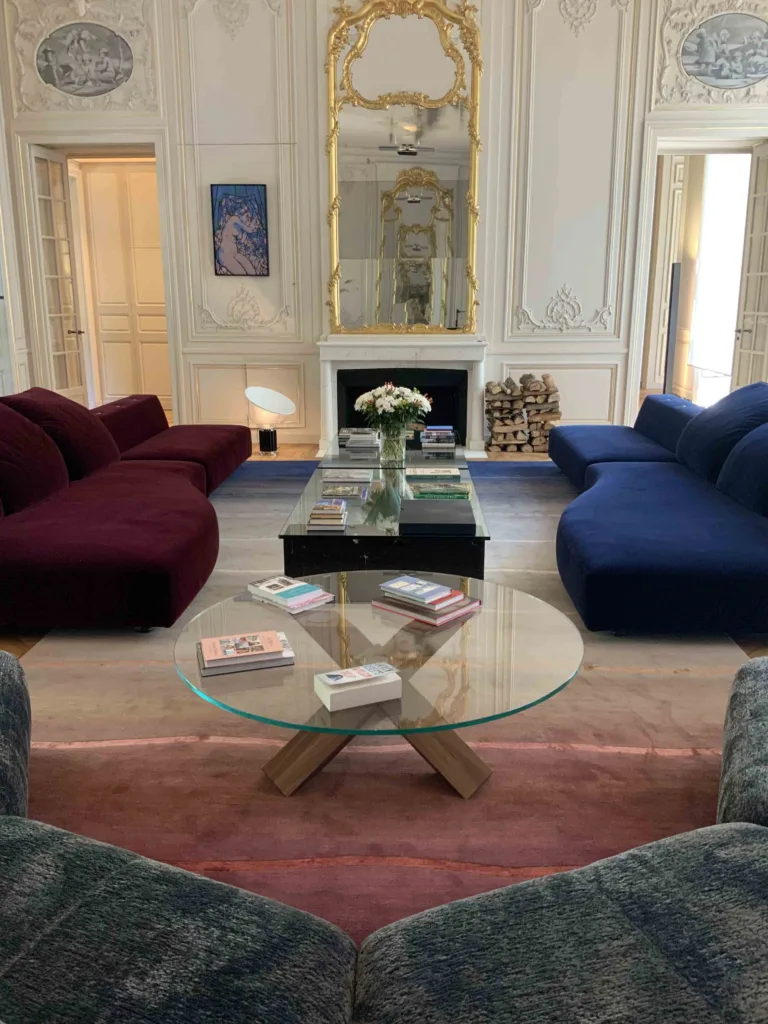
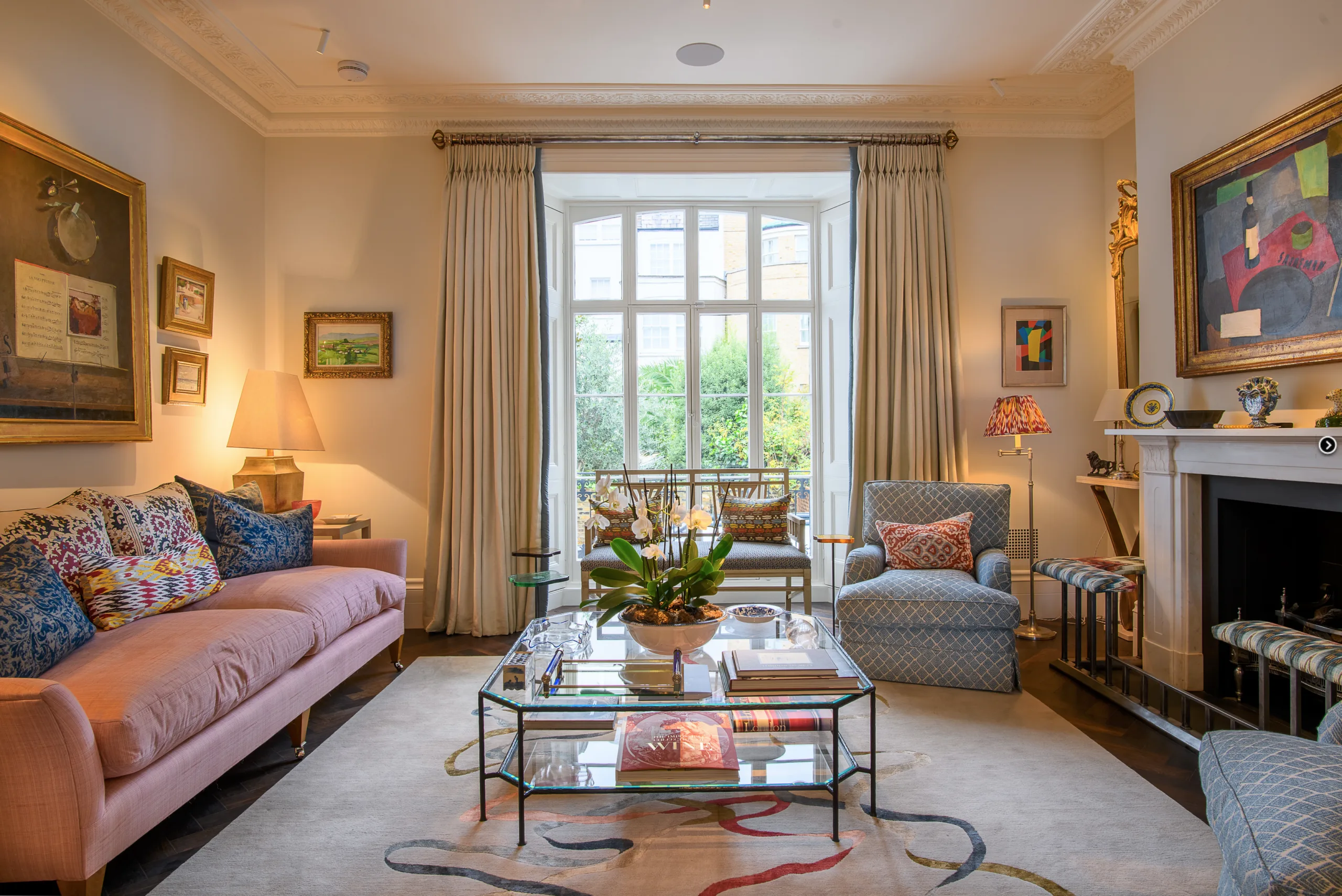
Deirdre Dyson has always been careful not to follow trends, creating carpet designs instinctively from inspiration as it comes. This lends Deirdre’s hand-knotted rugs a timeless quality which defies pigeonholing in a particular era or style.
A Deirdre Dyson carpet is created using natural fibres and age-old processes, unchanged for centuries. The result is an heirloom that, with the right care, will long outlive its owner.
We thought we’d take a look at some notable carpets which have stood the test of time – both ancient and more recent, traditional and contemporary, all of which have become famous in their own right.
The Ardabil Carpet
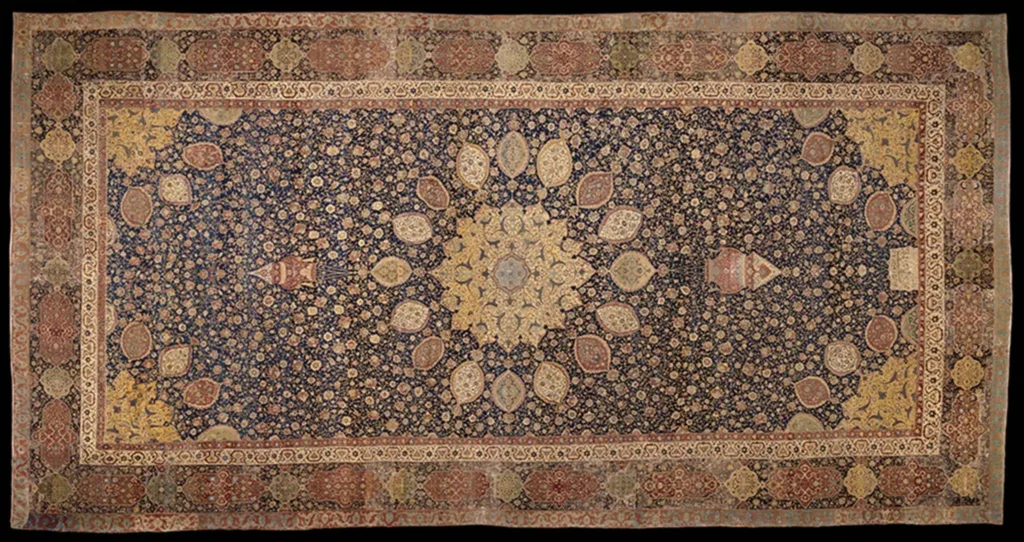
One of the oldest, largest and most historically significant surviving carpets in the world, the Ardabil Carpet was made in north-west Iran and dates from the 16th century. It is believed to have been commissioned for the burial place of Sufi leader Shaykh Safi al-Din Ardabili, head of the Safavid dynasty.
This intensely detailed Persian carpet is very densely hand-knotted in naturally dyed wool, containing around 5,300 individual knots per ten centimetres square — a carpet of this size would have taken a team of weavers years to complete.
The carpet was purchased by the Victoria & Albert Museum at auction in 1893 and has been exhibited there ever since, more recently in a specially designed, environmentally controlled display case where it is lit for only ten minutes every hour, to preserve its rich colours and materials.
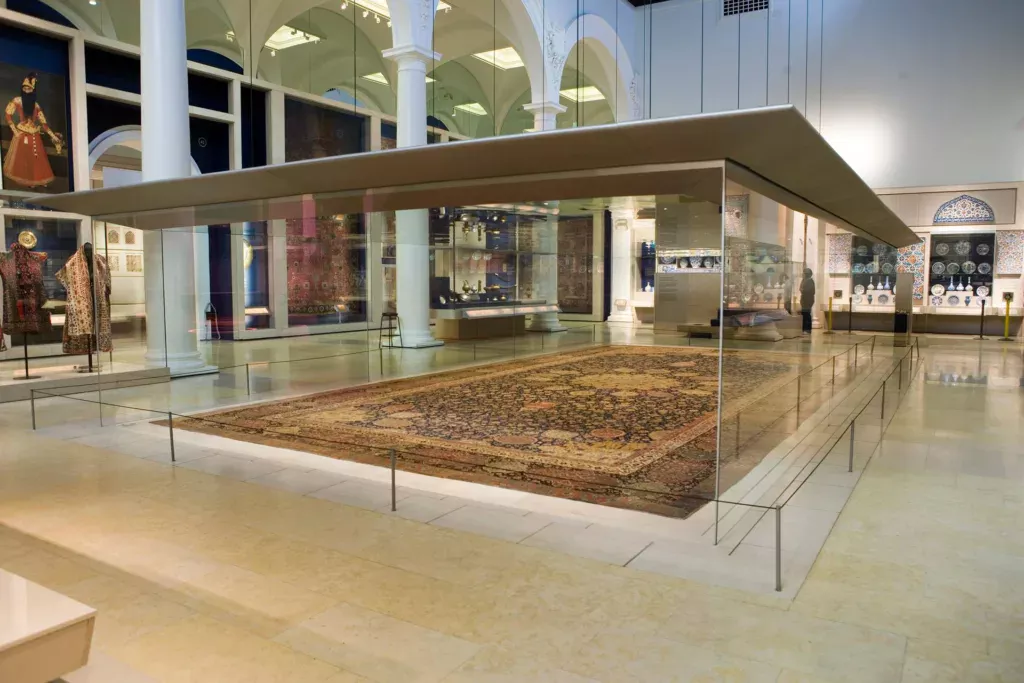
Inspecting the carpet on the V&A’s behalf prior to purchase, the celebrated Arts and Crafts designer William Morris described it as being of “singular perfection… logically and consistently beautiful.”
The Marion Dorn Carpet at Eltham Palace
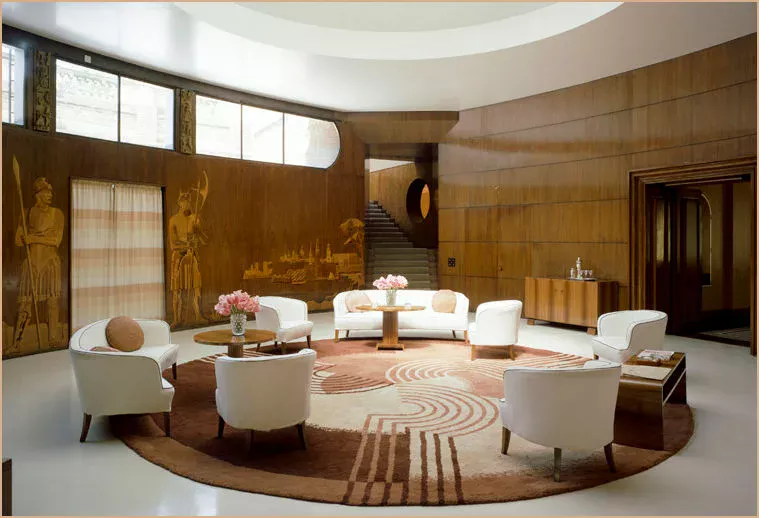
In 1933, London-based American designer Marion Dorn was commissioned by the eccentric Stephen and Virginia Courtauld to create a carpet for their Art Deco masterpiece: the entrance hall at Eltham Palace.
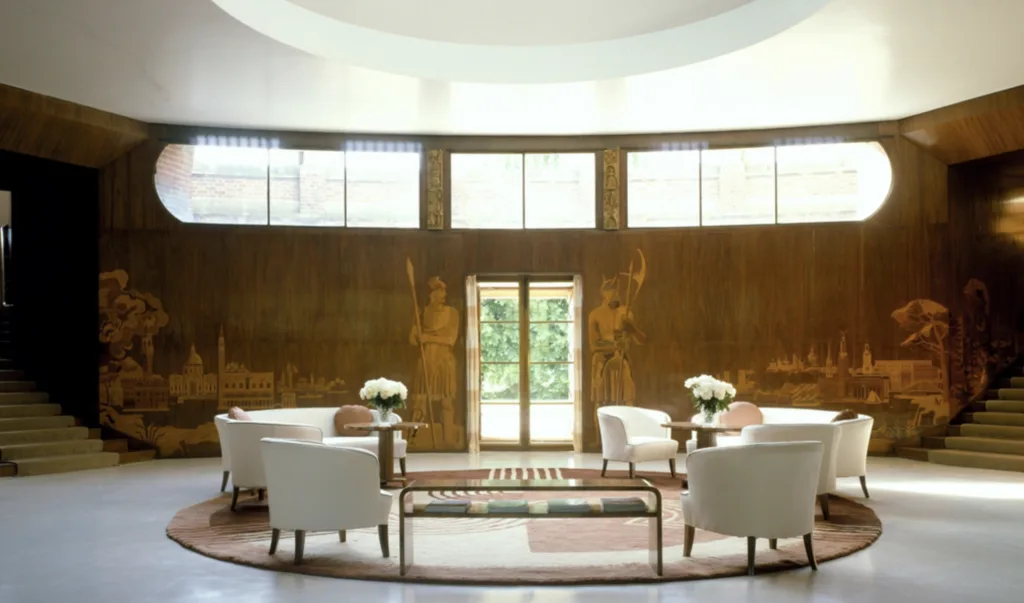
Part of a sweeping modern extension to the original Tudor hall and designed for entertaining, Swedish creative Rolf Engströmer led the room’s design – which features wood-inlaid walls with eclectic ornamentation, from a Roman soldier to the London skyline of St Paul’s Cathedral and Big Ben. The almost six-metre diameter circular rug formed the abstract centrepiece, surrounded by rosewood and leather armchairs.
Tufted in 100% wool, the carpet was one of several textile works Virginia Courtauld personally commissioned from the young artist, each carrying a Moroccan theme inspired by Virginia’s own time living in Tangiers.
Marion Dorn proved to be a prolific designer, going on to create the now-famous textile design Colindale for the London Underground, and later a carpet for the White House’s Diplomatic Reception Room.
The original Eltham carpet is now held in the V&A archive, though a faithful replica can still be seen in situ at the Palace.
The Frank Lloyd Wright ‘March Balloons’ Rug
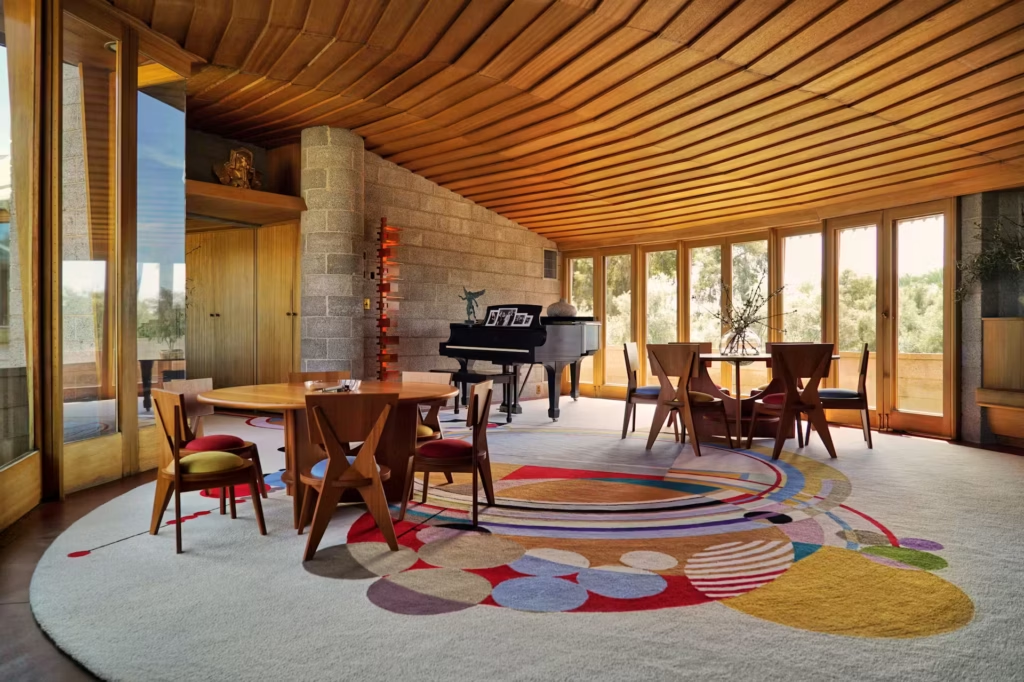
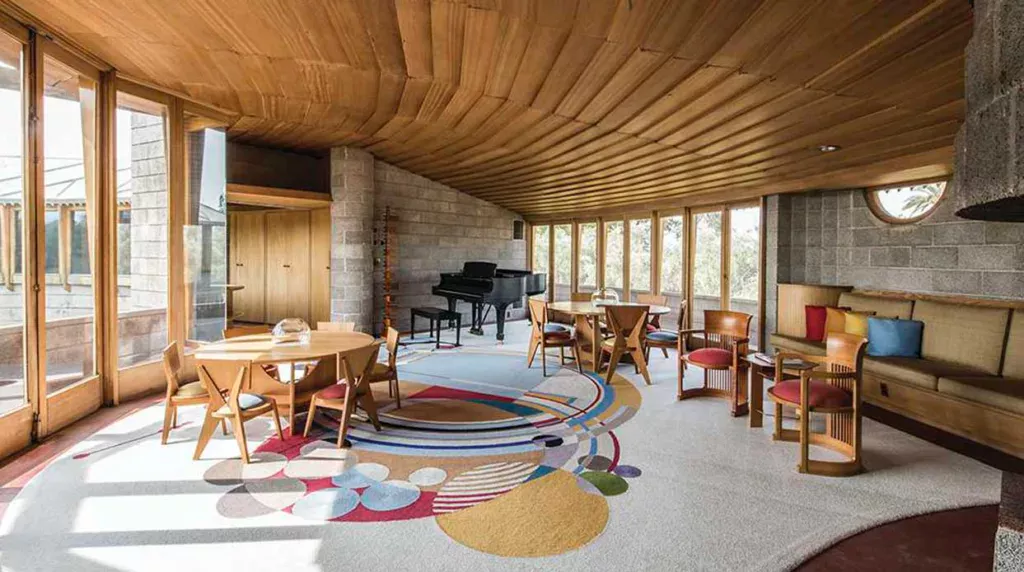
This joyous, abstract carpet was created for the home designed by Frank Lloyd Wright for his son David and his wife Gladys, and echoed the organic curves of the building’s structure- the bold architectural language for which the celebrated architect was famed, deployed most ionically at the Guggenheim Museum in New York.
Designed in 1952, the March Balloons rug provides an exuberant counterpoint to its surroundings, with graphic shapes and bold primary colours set against stark block walls, a concrete floor, and mahogany doors and ceiling panels. Wright designed the entire interior himself, combining simple geometric forms such as hexagons and squares, for furniture and lighting especially crafted to follow the room’s curvature.
The ‘King Kong’ Diamond Jubilee Carpet at Burlington Arcade
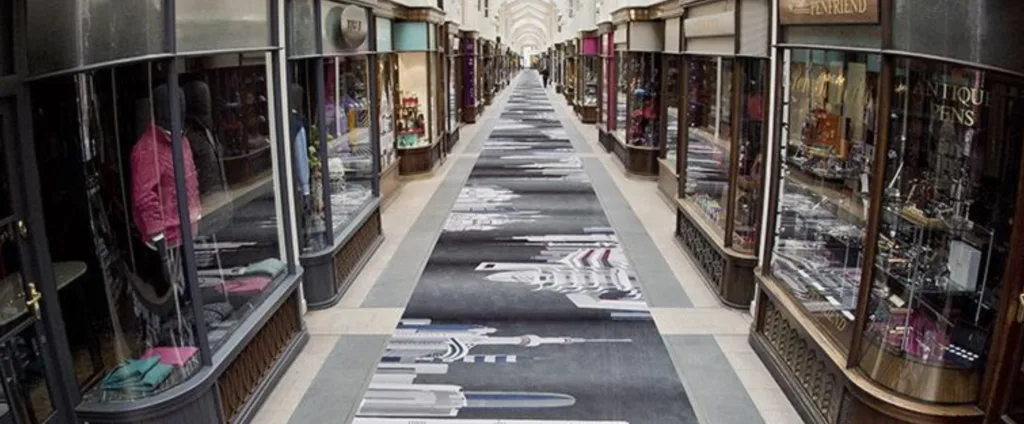
This vast machine-made carpet runner was commissioned by Viscount David Linley, the 2nd Earl of Snowdon, to celebrate his aunt the Queen’s Diamond Jubilee in 2012 and welcome international shoppers to London.
Created to run the entire length of the Burlington Arcade – the Georgian thoroughfare of luxury shops connecting Piccadilly with Bond Street, and the world’s first covered shopping arcade – the carpet was produced in collaboration with Brintons Carpets, based on Linley‘s own marquetry designs.
Measuring a staggering 180 metres, it featured 92 iconic buildings from around the world rendered largely in monochrome with occasional muted tones. Notable structures included the Duomo in Milan, the Aspire Tower in Doha, and China’s Pearl TV Tower. Whimsical flourishes included Mary Poppins flying over St Paul’s Cathedral, Quasimodo atop Notre-Dame in Paris, and King Kong scaling the Empire State Building.
London Mayor at the time Boris Johnson described it as “a magic carpet ride across iconic buildings from around the world that will add to the arcade’s allure.”
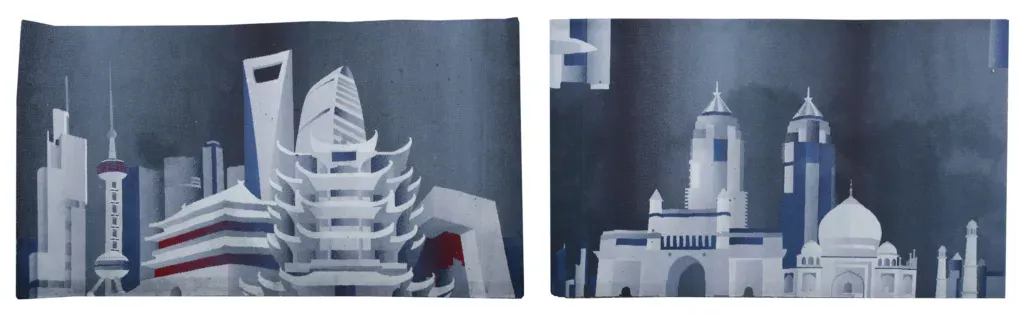
However, the carpet was removed shortly after installation: the sheer volume of visitors it attracted caused unwanted congestion and queuing in the arcade. It was later sectioned off and auctioned in pieces — ensuring that fragments of this remarkable work live on in private collections around the world.